Saturday, November 23, 2013

The World's Favourite...ad

I love innovation, especially where it's clever and touches an unserved market. If you get all three of these - the marketing trifecta - then it's a huge win.

I think British Airways and their Ad Agency have accomplished this feat with this contextual use of an old medium - billboards : - http://www.youtube.com/watch?v=j7vq7yS4ghE 

The clever things about this abound.  There are a series of variations in the video's launched on the board; it actually interfaces with the plane flying overhead so the results aren't random or canned, they are real.  And its engaging.

The use of new technologies to make a big impact is rare these days - there are lots of great ideas but many don't find traction with customers.  This one is simple and very effective.  Way to go BA.

Tuesday, October 29, 2013

The Aboriginal Legacy

I wanted to say kudo's to Australia.  Specifically Qantas, the national airline of the land down-under.

I live in a country that has a hard time admitting they were wrong for raping and pillaging the native people, and here's Australia with a not-so-different history celebrating it's indigenous peoples.

They paint their planes up in designs specific to their people, and they are indeed uniquely Australian.  I admire that on a few levels.  It says - "We have a great native people, and we're proud of them."  What other country that has a questionable history does this ?  Umm.. None.

Australia deserves recognition.  Not for the way they treated the aboriginal peoples, but for how they acknowledge today that their culture is richer for these people, and the native Australians are an intrinsic part of Australia's future as well.  We could all learn from this.

Wednesday, October 23, 2013

Asking the Right Question

A friend asked me an incredibly astute question about a big purchase I was considering.  So insightful was this question, that it made me think of my purchase in a whole new way. In fact thinking about his question and my answer meant I'm ready to make a decision now, something I hadn't been able to do before.  Often customers find themselves unable to make a decision to buy something as they aren't clear, just like the situation I found myself in.

The purchase I've been thinking about concerns a new car, and a fancy, sporty one at that.  As it's obviously not a need, you're probably listening to yourself think "mid-life crisis", just the same way I'm saying that to myself. I can live with that though.

When considering one of these it can either be a frivolous toy or it can be serious, and I've tended to look at it the latter way, trying to validate that I use a car daily and having a sportier one could fit my needs and provide some fun as well.  I've been hesitating for a long time though, and have looked at a used car for less money, or a newer, shinier one. Pro's and cons to both and I have been on the fence for a while on the decision.

My friend hit the nail on the head with his bright question.  It was: "which one are you more likely to drive in bad weather / winter?"  I live in an area that has a serious winter, and let's call be frank, few fancy little sporty cars are designed for winter, or even very usable in snow.  Underneath the question wasn't a query about traction or winter tires though, it was about use cases and value - depreciation vs usability.

You see the used car will cost less, but I think I'm less likely to drive it in winter (assuming it performs equally poorly as a new car) as I'll be looking to maintain it's value for a resale situation in the future.  A new car could be leased and if it's just mine for a defined period, I'm more likely to drive it wherever as depreciation won't be my concern.  I hadn't looked at the decision in this framework at all - and my friend knew that - as he's also gone down this road (no pun) lately, albeit on the frivolous toy justification side.  My indecision was based on the fact I couldn't figure out the question to myself that would differentiate the choices to be made - so I was waiting.  Now I actually feel very clear on moving forward.

The value of asking of the right question is incredibly high.  It can provide quite a bit of relief to your customer/friend, as it allows them to move past a log-jam in their own minds.  It does require knowledge of their situation and insights into their motivation though.  And that is almost impossible to do without discovering a little about them.

Saturday, October 12, 2013

The American Situation

The government is locked out, shut down.

The congress doesn't agree with the executive branch, and the idea of compromise isn't in the air.

The country's population is divided almost 50/50 along red and blue lines, and the Tea Party and Far Left each have tremendous power.  Discourse is disagreement.

Seems a setting for a futuristic novel about some totalitarian state, where chaos reigns. Instead it's the state of the US today, sad as it is.  When things done't go right, blame is the rule, but really - it isn't the answer.  It's not about denouncing and revoking Obamacare, or election manipulation via re-districting.

Instead, what's been lost amongst the loud voices arguing is the idea of leading.  Leading the world by example of how powerful a force democracy is.  Leading though selflessness and compromise.  Like a good parent leads their family, like a good spouse or good friend leads a relationship.

If I take a "in order for me to win, you HAVE to lose" approach, then I doom us both.  That's what was allowed to happen, and that's the idea that's been sold to the American public - our side has to win, and the other side must lose.  It's sad that this wasn't questioned, but the pursuit of power tends to to avoid sound consideration.

The left isn't correct, and neither is the right.  They're both wrong in the way they've participated and manipulated the process.  They're both wrong in the lack of compromise to make America better for the people of America.  Somehow this was lost in the need to be 'right'.

The situation in America won't get better until the people demand leadership and compromise to help them all out of this situation.  I fear that the voices saying this are too softly spoken, and overshadowed by their own red-ness or blue-ness.  Why would I listen to a ...  (insert Republican or Democrat) - even if they are correct.

No, the situation in America won't get better soon .. and the loss will be felt by the American people for a long time to come.


Friday, October 11, 2013

Fire, Ready Aim

I've been around some people lately that have a real bias for action.  I enjoy that phrase, though the people who (only) have that approach can be speed-blind at times.

It's been interesting to watch them in this effort we're involved in, as they MUST do it fast, even though it's clearly acknowledged that we'll have to "tweak" the output afterwards.  I think they've sold themselves up the river, as we all know they won't be tweaking, but rather doing full blown determination of what it is that they're trying to achieve exactly. Or 're-achieve' to be precise.

There's a 0% likelihood that we'll actually get to their overall objective with this approach, and yet it's also unacknowledged at this point that they need to be seen to be doing something.  That's a powerful motivator for action - even if we can all agree its the wrong action to take.

It's fascinating to be part of efforts like this, the way a slow-motion car crash in a movie is fascinating.


Wednesday, September 18, 2013

Faith & Folklore vs Technology

I saw a wonderful little line the other day that's been bouncing around my brain ever since: "cell phone cameras deter aliens".

The point, made as astutely as ever by Seth was that now that the cell phone and its high quality cameras were ubiquitous, the instances of sighting alien spacecraft has gone way down.  Prior to our always-connected world where something wasn't real unless it was instagram'ed, the instances of sighting flying saucers were folklore, and generally not independently confirmable.  Bigfoot, the Loch Ness Monster and other such popular myths have similarly suffered from the emergence of connected-awareness. Does this demonstrate these situations as fallacy, or wishful thinking ?  Perhaps a little, yes.

It's interesting and unintentional that technology has started to give us tools to dispel or prove those things that required only faith in the past.  And that got me thinking.  What technology would emerge that would have a similarly profound impact on our beliefs and ways of life that we've had to take on faith until now.  Would time travel and the ability to go backwards into our history and validate or prove false the fundamental precepts of Christianity, or Islam forever change our religious beliefs?  Will cancer 'vaccines' tip us over the edge due to food production limitations, as our population swells with healthy people.  Will the ability to manipulate the sex of your unborn baby mean football is that much more competitive, and even more wars break out as the world tips towards having more territorial males..?

The unintended consequences of 'advancements' are fascinating to imagine.  But it does make you want to loosen your grip a little on your most sacred truths as well I think.

Wednesday, August 21, 2013

The Horizon Line

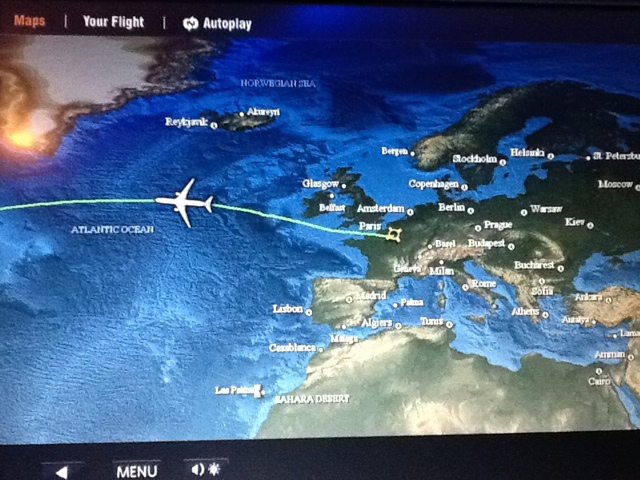
I went around the world this week.  Modern travel makes this far more feasible than that sounds. It's not extraordinary, it simply requires lots of sitting.  Its is special if you've not travelled too much, or perhaps if you envy long periods of sitting. I don't know anyone in the latter situation, but in that sense - it is a big world, so who knows.

I travel for business very frequently, and one of the side benefits of that is the ability to travel for pleasure. Loyalty begets loyalty in this sense, though if I had colds and fever sickness frequently, I don't know that I'd like to be rewarded with more of the same.  Perhaps airlines don't grasp some of the "fun" their own consumption experience entails.

I have come away from this week with the renewed understanding that our planet is indeed small. Getting around it all is easy. It might be a real feat to be on a Jupiter size planet and circumnavigate. Then flying at 1000 km/h, like as on a boat here on Earth,  it might take months or years.  But in our part of the solar system, we're talking about 40 hours of sitting. Big deal.  

What it brings into perspective is our fragility, due to our small size. This is relative of course. Sure, I'd hate to have to walk around the world, but think about the snail or worm's progress across the sidewalk. Then think about the Albatross, Arctic tern or Grey whale that regularly span hemispheric oceans every season.  If animals do this, as part of their innate DNA - then why do we think this is special..?

We would all approach the world differently if we were more migratory as people.  Without being 'travellers', our horizon is our whole world and the empowerment that we offer to the horizon line is self defeating I think.  "If I can't see past it, the places beyond must be far away."  Poppycock.  That's some sort of pre-historic, latency issue that was intended to ensure we didn't get lost from the pack of proto-humans we lived with for self-protection.  If I travel the world, the sabre tooth tiger doesn't get me these days, though duty-free stores may.

The other horizon-line fallacy invoked is that we can we can do what we want to the planet, and it is big enough to recover. (Hence my fragility comment) Problems only manifest past the horizon.  Sure that sounds silly, but look at history - when does the US enter WWII ? Post their islands being attacked. When a bus plunges somewhere in the world, it's only news if 3 XXX's were onboard. (At XXX, insert your nationality here). Polar ice-cap melting? Sure seems cold here in winter still. If stuff happens 'over there', past the horizon it doesn't matter to us as much as if it was right in front of us. 

Imagine for a moment that you are driving in a car, over a bridge.  Over water.  Suddenly, the car veers of the bridge, and into the water and sinks towards the bottom.  

Clearly, you're having a bad day in this car. Underwater.

What becomes evident very fast is that you're about to run out of air, and so effort is made to escape the car to avoid drowning.  That all makes sense, we would all react that way.  And I think the allusion is also clear.  You see we're all in the same car, and it is small, though due to the horizon line..we don't quite acknowledge that yet, this fact that we're in deep trouble.  Even though there's significant evidence to support the fact we're in trouble. 

Ignoring the fact doesn't make our "air" last longer to extend the analogy, it just gives us less reaction time.  Do you think more or less reaction time is beneficial if in that unfortunate situation?

I, for one, wish we'd all understand this horizon line bias that colours our perceptions about our world, as I think it would change how we approached just about everything.